
Book project
My book project Opening the Black Box of Financial Negotiations: The IMF, Argentina, and Brazil in the Postwar Era (1945–64) examines global financial governance during the formative postwar years, when Latin America served as a testing ground for the IMF’s first large-scale adjustment programs. Situated at the intersections of International Political Economy, Latin American economic history, global financial governance, and digital humanities, my book addresses a key puzzle: why did Argentina secure the IMF’s financial support through multiple arrangements in the 1950s and early 1960s while Brazil, despite similar economic and political conditions, did not? Current research on IMF lending, whether through large panel datasets or single-country case studies, has not fully explained this divergence: broad datasets fail to capture differences driven by observable factors, and individual case studies are limited in scope. To address this conundrum, I used advanced natural language processing (NLP) techniques and AI tools to analyse and scale the study of a vast corpus documenting financial negotiations between the IMF, Argentina, and Brazil. My research offers a novel, granular perspective on decision-making within and between the IMF and member states, illuminates the dynamics of global financial governance during the formative postwar years, and situates Latin American political economy at a time when the region struggled to secure public finance and pursue developmental planning.
Work in Progress

Who gets a program? IMF Sentiment towards Argentina and Brazil, 1956-64
Submitted to: American Political Science Review
A large body of literature seeks to explain when the International Monetary Fund (IMF) supports a country’s adjustment program, with most studies pointing to the country’s economic situation or political alignment with the United States, the IMF’s major shareholder. This paper adds to this literature by showing that IMF “sentiment”— confidence in the national authorities’ willingness and ability to carry out their adjustment program— is also a key determinant of IMF support. To test my hypothesis, I combine archival methods, Natural Language Processing (NLP) tools and Generative Pre-trained Transformers (GPT)-based artificial intelligence algorithms, and statistical analysis to “open the black box” of program negotiations between the IMF and Argentina and Brazil during 1956-64. Consistent with my hypothesis, I find that IMF “soft information”—knowledge about the country and its authorities gained through human interactions over time, encompassing perceptions of, for instance, trust, credibility, and capabilities—is a statistically and economically significant determinant of program approvals, even controlling for macroeconomic variables. Moreover, contrary to some of the existing literature—and popular perceptions—I find that US sentiment towards the borrowing country is insignificant.
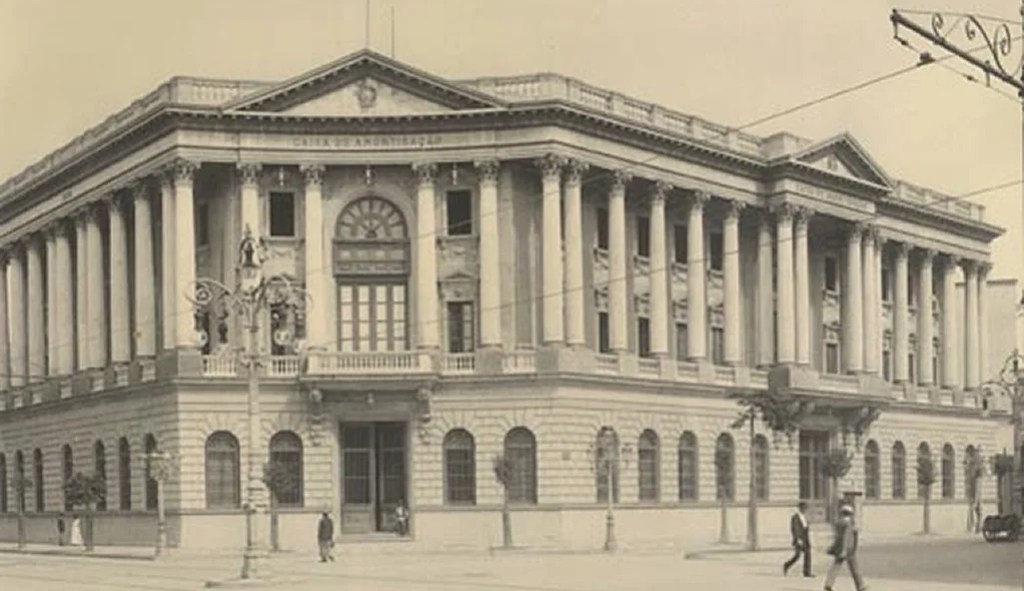
Stability and Growth Tug-of War: The Macroeconomic Roles of Banco do Brasil, 1964-1985
with Sebastian Álvarez
Submitted to Journal of Iberian and Latin American Economic History
Banco do Brasil(BB) was a cornerstone of Brazil’s economic policy between 1964 and 1985, a period characterized by ambitious growth strategies and persistent monetary instability. While previous research has focused on BB’s role in fostering inflationary pressures through its support of Treasury financing, it has largely neglected the broader scope of its macroeconomic functions. Specifically, the literature provides limited insight into how BB navigated the trade-offs between growth and stability through its diverse activities in monetary management, developmental finance, and fiscal intermediation. This study addresses these shortcomings by reorganizing BB’s domestic balance sheet and examining extensive archival materials, including Revista Bancaria Brasileira and minutes from the Conselho Monetário Nacional. Our findings reveal how BB’s roles adapted to Brazil’s changing economic conditions and policy goals during periods of accelerated growth, global crises, and financial instability. By reframing BB’s historical functions, this study demonstrates the bank’s indispensability in mitigating key economic trade-offs and underscores its enduring impact on Brazil’s developmental model. These insights offer a nuanced understanding of BB’s centrality in shaping Brazil’s financial system and broader political-economy regimes.

Building Sentiment Indices from Confidential Policy Sources: A Mixed-method Approach with Large Language Models
Target: Journal of Documentation
This article introduces a novel mixed-method framework for extracting sentiment from confidential policy documents by combining recent advances in Natural Language Processing (NLP) with archival research. Although sentiment analysis is increasingly used in economics and the social sciences, its application to confidential policy texts remains limited—largely due to the challenges of accessing and processing multilingual, heterogeneous, and internal sources. Drawing on over 8,000 declassified documents from the International Monetary Fund (IMF) and the governments of the United States, Argentina, and Brazil—including internal reports, memoranda, and diplomatic correspondence—this study demonstrates how archival research, rigorous pre-processing, and state-of-the-art NLP techniques enable the construction of domain-specific sentiment indices from heterogeneous and multilingual datasets of confidential policy sources. Unlike prior work mostly based on public text-data, this approach captures the semantic nuance and contextual meaning embedded in candid, internal communications. By bridging AI-driven NLP with qualitative research, this article expands the methodological frontier of text analysis in international governance. It offers a scalable and replicable framework for analysing state behaviour and institutional dynamics through the lens of confidential textual data.

Experimenting Through Crisis: The IMF, World Bank, and Latin America’s Lost Decade, 1982-94
with Edoardo Altamura
Between Numbers and Narratives: The IMF, World Bank, and UNCTAD on Sovereign Debt during Latin America’s Lost Decade, 1972-85
with Paula Vedoveli
 Fernanda Conforto de Oliveira